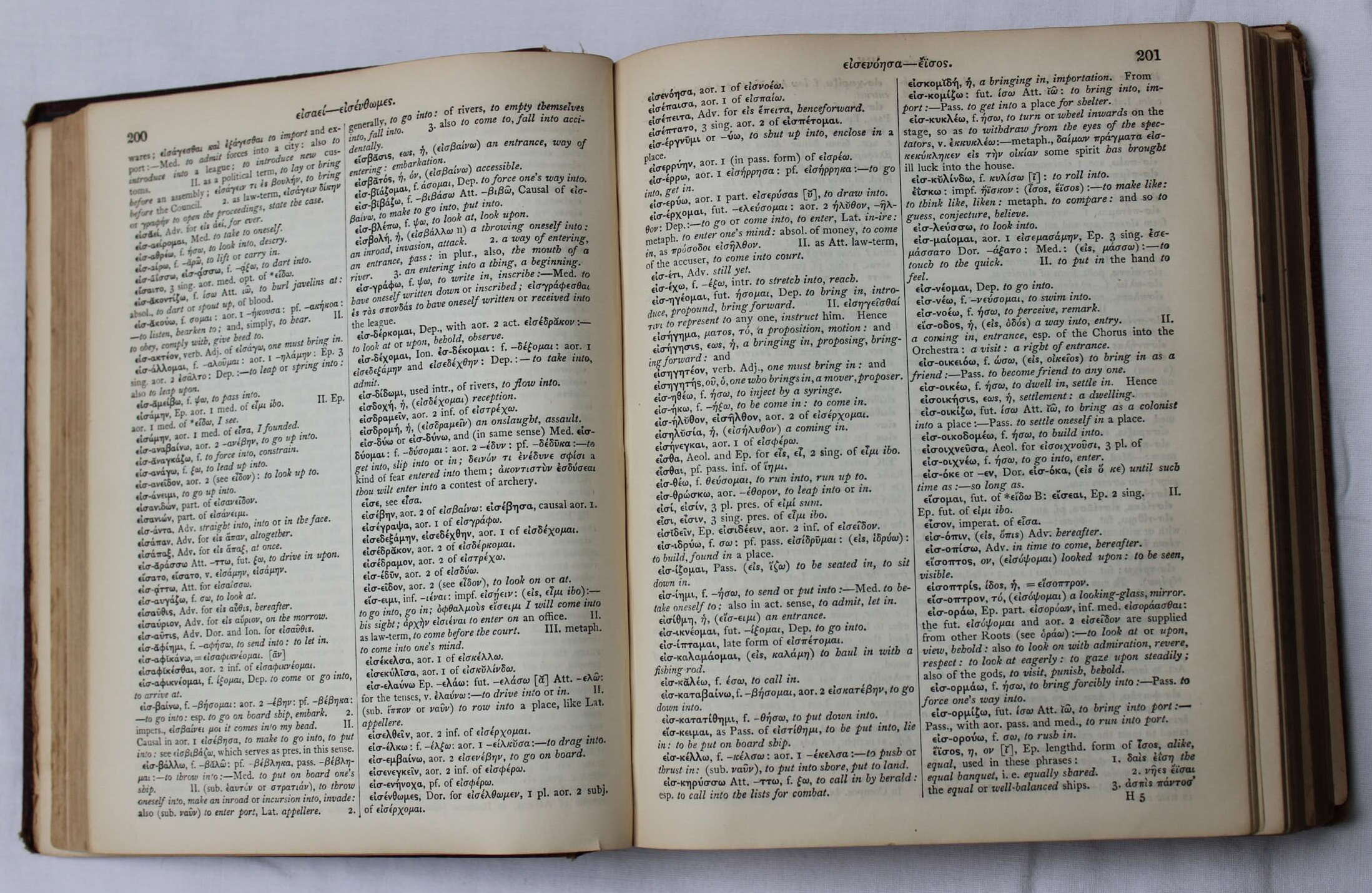
Description
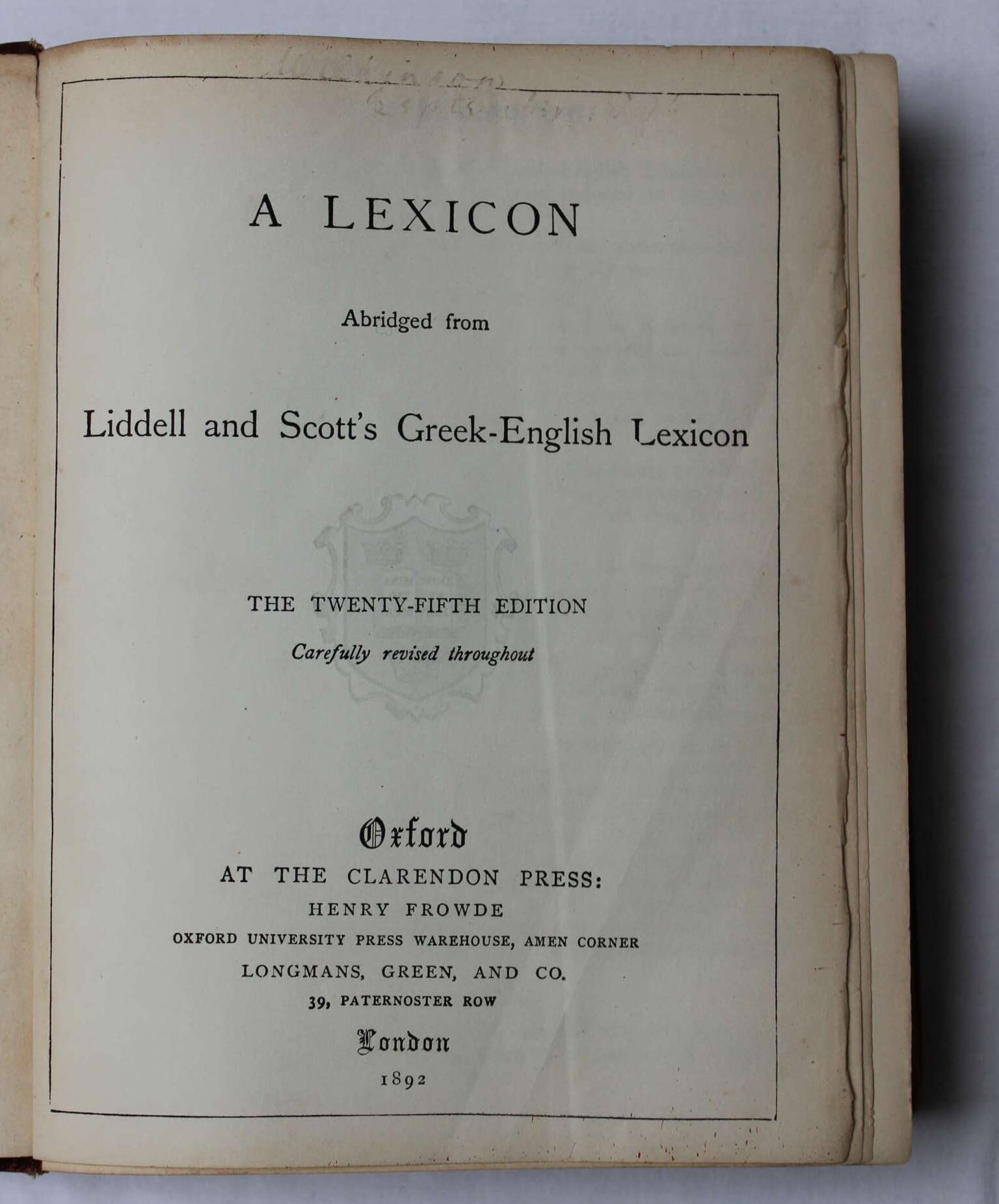
The Abridgment of Liddell and Scott’s Greek-English Lexicon is intended chiefly for use in Schools. ith has been reduced to its present compass by the omission
I. Of passages cited as Authorities, except where examples seemed necessary to explain more clearly the usage of a word;
II. Of discussions upon the Derivation of words;
Ill. Of words used only by authors not read in Schools, or of the particular meanings of words not in general use, such as medical or scientific terms. But words used by Theocritus, the writers of the Anthology, Lucian, and Plutarch in his Lives, have been retained; and especial care has been taken to explain all words contained in the New Testament.
Words are printed in Capitals, when they are radical forms, or when no im nearer the original Root is known to exist. The Derivation, when it is certain, is placed before the English explanation: when this is not the case, some notice will be found at the end of the word.
Many additional tenses and cases, mostly Homeric or Doric, have been inserted to give a clue to the simple word, when there seemed to be any difficulty or irregularity in the formation. All tenses and forms of words in the Gospels that presented any difficulty have been inserted in their place.
The quantity of doubtful syllables has been marked, except in such tenses of Verbs, cases of Nouns, and words, as are regularly derived. In such forms the quantity ought to be known to young students from grammatical rules.