Description
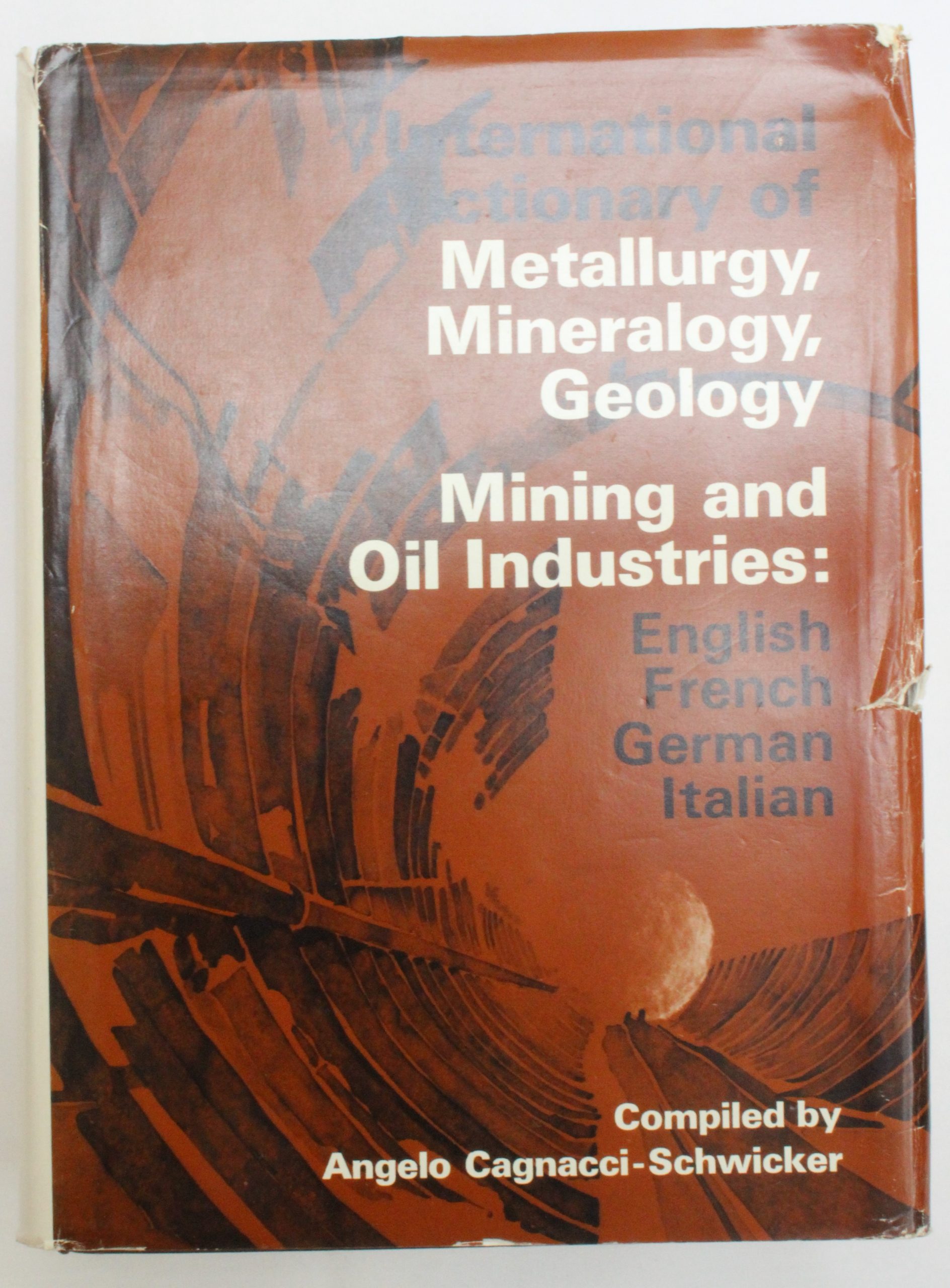
International Dictionary of Metallurgy, Mineralogy, Geology and the Mining and Oil Industries
• The first multilingual, multi-industry technological dictionary.
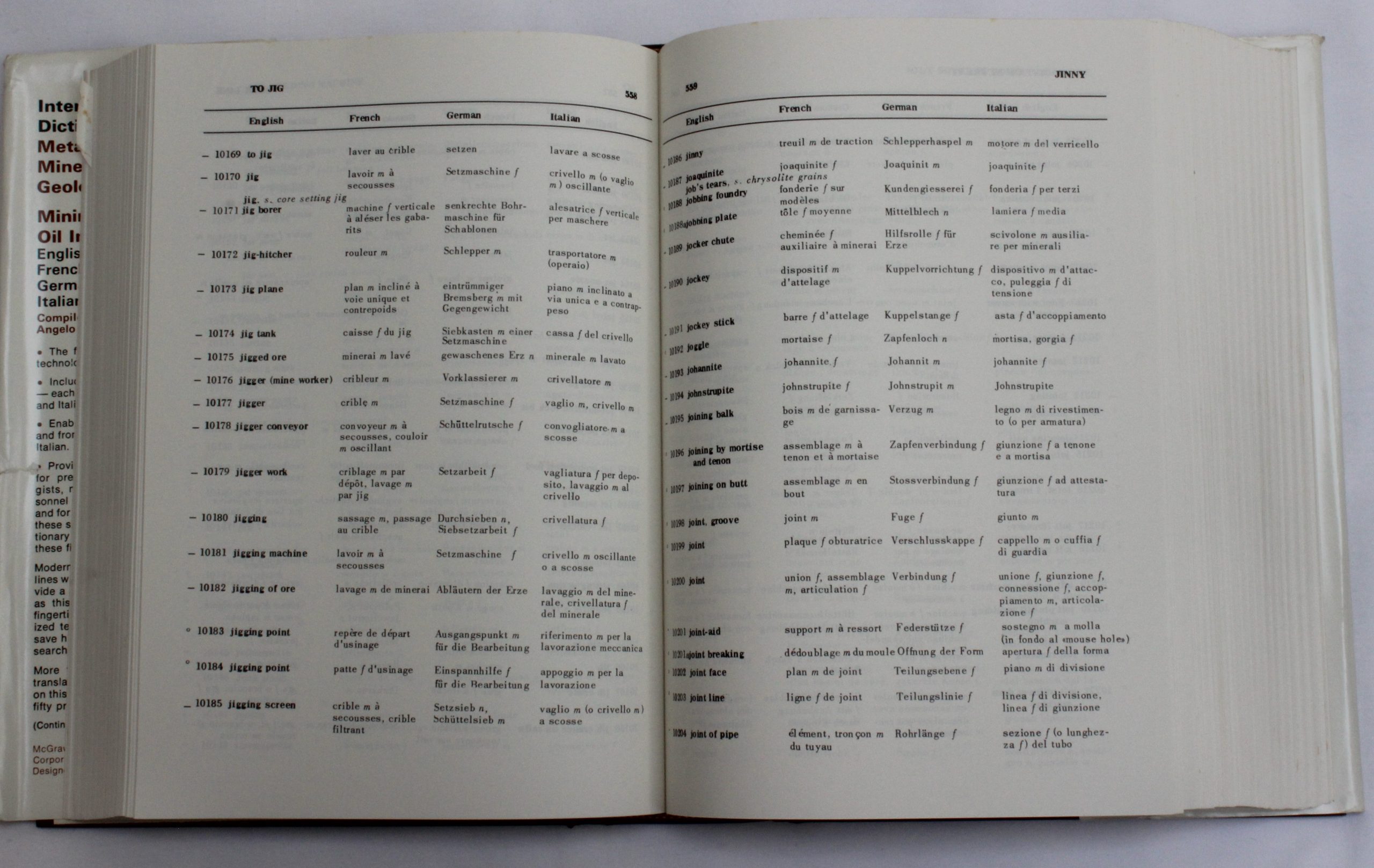
• Includes over 27,000 technical terms – each in English, French, German, and Italian.
• Enables simultaneous translations to and from English, French, German, and Italian.
• Provides numerous cross-references for precise translation. For metallur-gists, mineralogists, geologists, personnel in the mining and oil industries, and for libraries and institutions serving these specialists-this multilingual dictionary of technical terms germane to these fields will fill a long felt need.
Modern technology crosses language lines with increasing frequency. To provide a single, easy to use volume such as this, that puts at the technician’s fingertips the full spectrum of specialized terms required in his work, is to save him long and tedious hours of research and cross-checking.
More than one hundred professional translators and scientists collaborated on this work. They consulted more than fifty pre-eminent dictionaries and glossaries on each technology. They combed English, French, German, and Italian catalogs, price lists, and monographs for new terms and double checked spelling and translations with mother-tongue translators and specialIsts in each field.
The book is divided into two sections, the first consisting of 1,011 pages, each four columns across. The first column on each page is devoted to English terms arranged in alphabetical order and numbered from “1” – abacus to “20372” — zygdite. The second, third, and fourth columns give the French, German, and Italian equivalents of the English terms. (The addition of 6,874 more terms during printing brings the total to 27,246 entries in each language.)
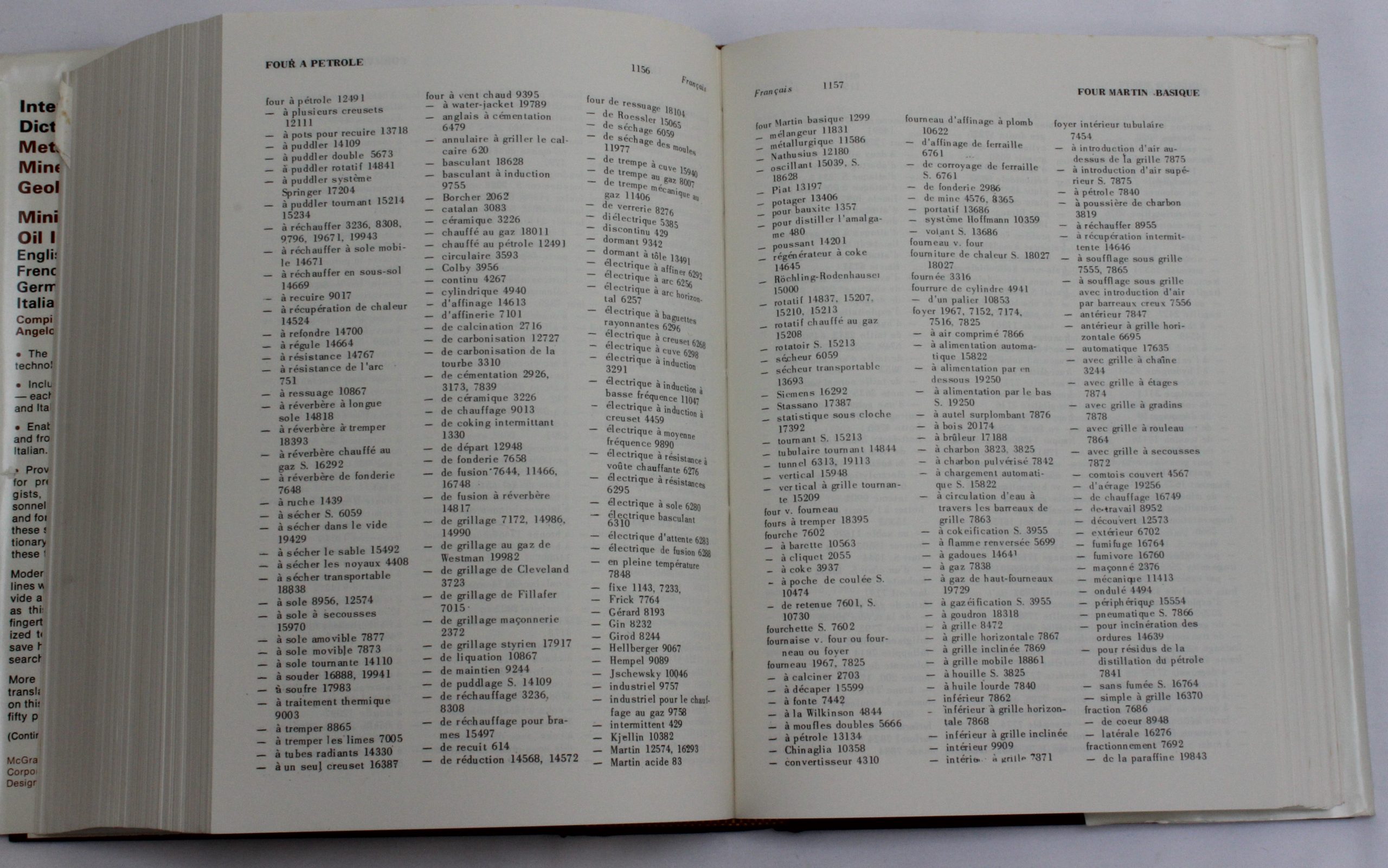
Section Two offers the user the option of working from either a French, German, or Italian term to any one or all of the other languages. It consists of three alphabetized indexes: French, German, and Italian; each entry followed by a number or numbers that refer the user back to Section One and the appropriate English term or terms – which, of course,
automatically presents him with all four translations.
Another aid to the user is the symbol appearing beside each English term. These symbols indicate to which industry — geology and mining, metallurgy, or oil – the word is related and enable the user to select the proper word for his purpose.
This is particularly helpful, for example, in situations such as the English term “to draw” presents. “To draw” is appropriate to each industry in English; but in French, German, and Italian different equivalents exist for each industry. Thus, “to draw” is listed, numbered, and coded on five separate lines in accord with its one oil, two metallurgical, and two geological translations.
This is, in short, a volume that has been prepared with extreme care; conceived and compiled to anticipate and answer the requirements of every user – technologist, scientist, scholar, or translator.